Book
The essential

Luxury and know-how

Gold in the fingers

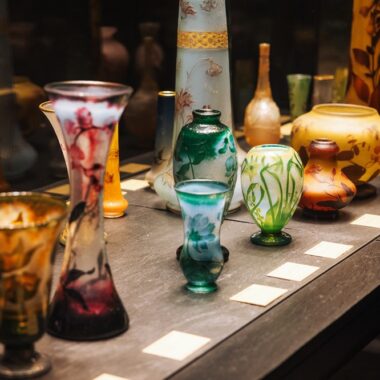
A land of creativity, it is thanks to our history and the richness of our resources – water, wood, and soil – that luxury manufacturing began in Meurthe-et-Moselle as early as the 16th century. In 1764, thanks to Louis XV, the first major glassworks in France was established in Baccarat . A little earlier, at the beginning of the 18th century, the Lunéville-Saint-Clément earthenware factory , a royal manufactory, carved out a prominent place for itself in the art of tableware. This art reached its zenith at the end of the 19th century with artists such as Émile Gallé and the Daum brothers.

Baccarat Collection

Baccarat, the most famous crystal factory in the world

In 1764, the Bishop of Metz, Louis-Joseph de Montmorency-Laval, requested permission from King Louis XV to establish a glassworks on his lands in Baccarat. Over the centuries, Baccarat crystal has become one of the most famous in the world . While the factory itself is not open to the public, the museum recounts the history of the crystalworks and showcases more contemporary pieces.

Discover
Enamels and Earthenware of Longwy

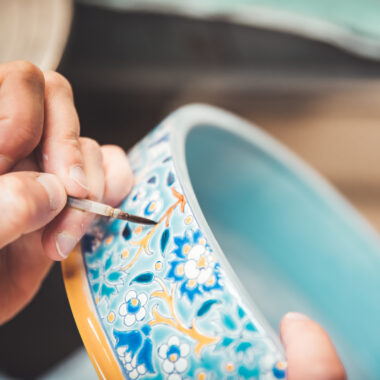
Le Longwy Enamels and Earthenware Museum invites you to discover a unique know-how in the world.
Through this visit you will learn more about the links that unite Longwy to the main European artistic movements, from the 1870s to the present day. A living heritage that impresses with the finesse of its work.

Discover
artisan gesture from the Longwy Enamel Factory
embroidery

Lunéville embroidery

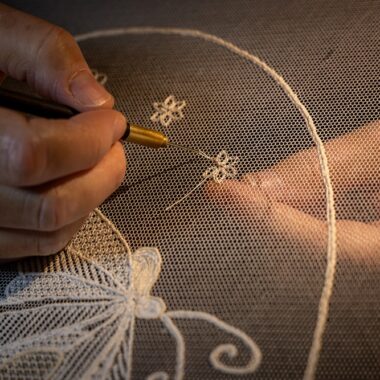
Listed as part of UNESCO's Intangible Cultural Heritage , beaded and sequined embroidery is an art form invented in 1870 in Lunéville. It involves attaching beads to fabric using a chain stitch with a hook. The pieces to be embroidered are hung on a loom. Its inventor, Louis Ferry, conceived the idea of ​​pre-threading the beads and securing the thread with the lace stitch known as "Lunéville stitch." The distinctive feature of Lunéville beaded embroidery is that it is worked on the reverse side. The exquisite craftsmanship of this art can be admired at the Lunéville Embroidery Conservatory.

Discover

The Lunéville-Saint-Clément earthenware factory

In 1730 Jacques Chambrette opened a pottery in Lunéville and then a second in Saint-Clément in 1756. In 1922 Edouard Fenal, owner of the Badonviller pottery, became the owner of the factories in Saint-Clément and Lunéville. He established the Atelier d'Art de Lunéville, where Majorelle worked in particular. Sculptors created pieces in the Art Nouveau and Art Deco styles.
Although the factory has ceased operations, the famous Réverbère motif can still be found on many tables today!

earthenware
Daum collection at the Museum of Fine Arts in Nancy

The Daum Factory

After the war of 1870, Jean Daum, originally from Bitche, settled in Nancy and bought the Sainte-Catherine glassworks in 1878. His sons Antonin and Augustin oriented Daum production towards artistic creation and Jacques Grüber was recruited in 1893. That year, the Daum crystal factory participated in the Chicago World's Fair of 1893 and won participation in the Nancy exhibition the following year. Today, the Daum Manufacture partners with the greatest artists and designers to create exceptional pieces!

Discover

Discover the artistic professions

learn more