German blockhouses
from Champcourt wood
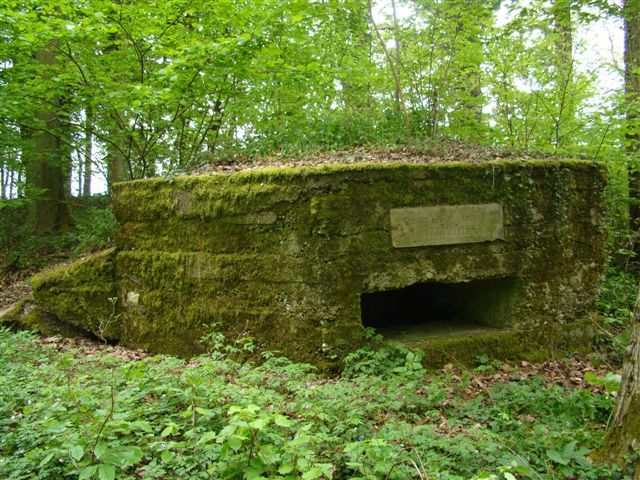
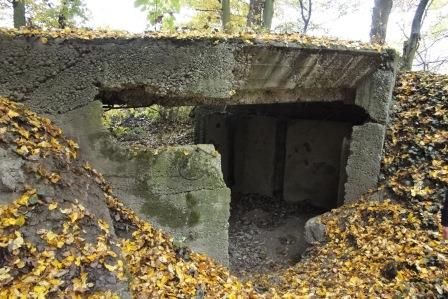
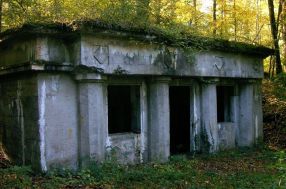
Located on the edge of the Bois de Champcourt, in the territory of Xures, the reinforced concrete constructions were semi-buried, to conceal them and protect the gunners. Five blockhouses were built in May 1918 by German soldiers: four firing casemates and a command blockhouse. Today, two of them are well enough preserved to observe their characteristics, two others are completely destroyed and the fifth, badly damaged, has retained its launch pad. A few days after the declaration of war, on August 20, 1914, the French offensive in annexed Lorraine was brutally stopped at Morhange. The German counterattack pushed the French back beyond the Meurthe but was stopped during the Battle of the Charmes Gap. The Germans then turned towards Nancy, but suffered a further defeat during the Battle of Grand-Couronné which ended on September 13, 1914. The French regained most of the lost territory, but the front, which stabilized in the autumn, did not allow them to recapture the villages of Xures, Parroy, Coincourt, Réchicourt, Juvrecourt, Bezange-la-Grande and Mouacourt. For four years, the area was the object of almost daily artillery duels. Hoping to maintain this position, the Germans settled and built numerous concrete shelters, including these five blockhouses in May 1918. The men of the 1st Bavarian Field Artillery Regiment left their mark on the command blockhouse. Located on the edge of the Bois de Champcourt, in the territory of Xures, the reinforced concrete constructions were semi-buried, to conceal them and protect the gunners. Bags of solidified cement served as additional protection. Only shelters No. 1 and No. 2 are sufficiently well preserved to observe the characteristics described below. Nos. 3 and 4 are completely destroyed. No. 5, although badly damaged, has retained its firing point. The first blockhouse precedes the other four; it is the command blockhouse. Very cramped, it has two openings facing east and north and not west, on the French side. A tunnel connects it to the communication trenches. The outlet of this tube is protected by a concrete screed. The 4 firing casemates are aligned along the edge of the forest. They had only two openings: the gun embrasure on the front side and an entrance at the rear. They each housed a gun, probably the German 77mm gun. It could rotate 45° on a fixed axis resting on a semi-circular firing point. The positioning of the blockhouses thus ensured coverage of the entire space. The German 77mm gun and the French 75mm gun: These are the two rivals of field artillery. The caliber is practically identical, the range for both is very similar; it is around ten kilometers with a slight advantage for the French. The shells from the Xures cannons could reach the villages of Arracourt, Bathelémont and Bauzemont but rather than these villages, their objective was to decimate a possible advance of the enemy infantry, as four years earlier at Morhrange.