The Florainville Hotel
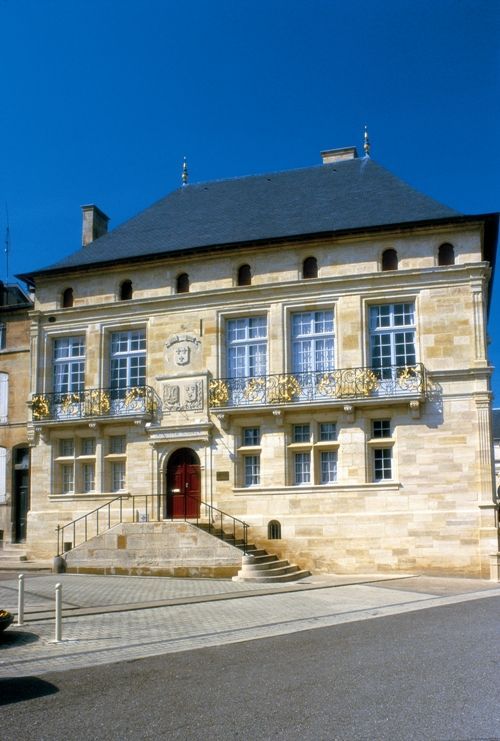
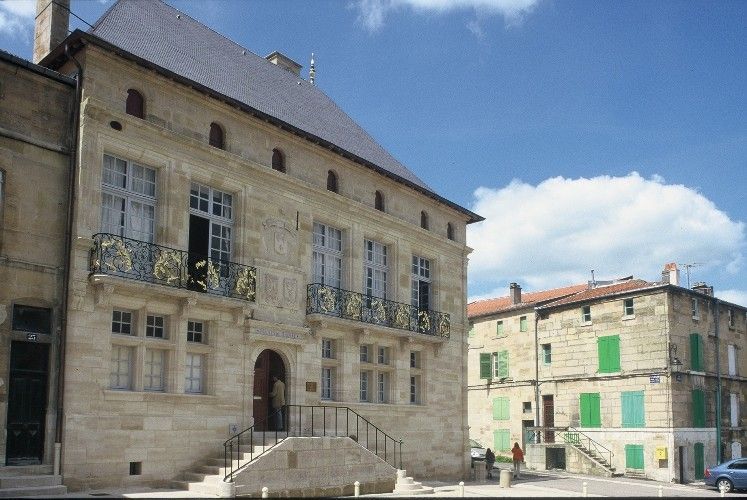
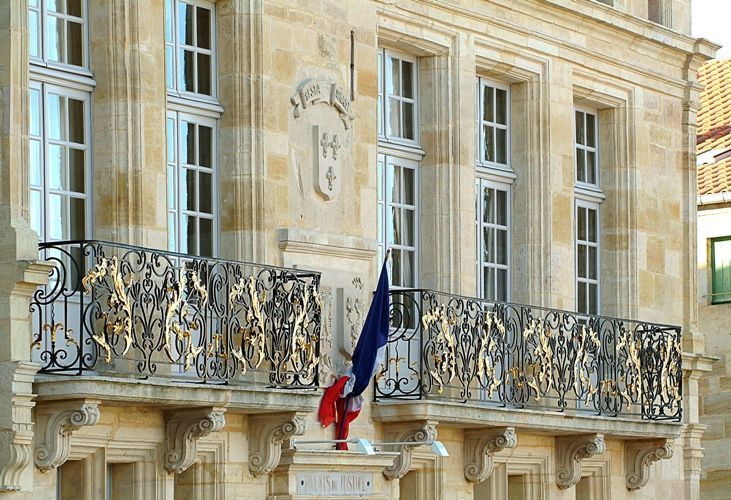
Built during the Renaissance for the Florainville family, close to the Dukes of Bar, this building dominates Place Saint-Pierre with its rich ornamentation. It was completed in the 18th century when the building became the seat of the municipality. The first written record of this building dates back to 1628. At that time, it was occupied by the Florainville family, originally from Luxembourg, who held it as a fief from the Dukes of Bar. In the 17th century, it was also known as the Hôtel de Meuse after the Baron de Meuse, its owner. Becoming the property of the City of Bar-le-Duc in 1752, it housed the Town Hall until 1794 before moving to the lower town near the current prefecture. It was here, therefore, that Princess Marie Antoinette of Austria was received by the city officials on May 10, 1770, on her way to Compiègne where she would marry the future King Louis XVI. After housing a reserve military company from 1805 to 1814, the building became the seat of the municipal museum when it was founded by the architect Théodore Oudet and Mayor Paulin Gillon in 1841. Since 1949, it has housed the High Court and then the Assize Court. Its construction can be dated to the years 1560-1580. Like the other townhouses on the square, it is built of Savonnières stone and has three levels, including an attic floor with arched dormer windows. It is distinguished, however, by its high hipped slate roof. Renaissance features are still visible: the mullioned windows on the ground floor, the molded stringcourses that rhythmically articulate the horizontal façade, and the Doric pilasters that emphasize the verticality of the elevation. The transformation of this private residence into a public building in the 18th century led to the addition of a flight of steps in front of the entrance, the enlargement of the first-floor windows, and the creation of two balconies on corbels adorned with wrought-iron railings attributed to Jean Lamour, the designer of the gates on Place Stanislas in Nancy. These gates originally featured fleurs-de-lis and cornflowers. The coat of arms of the Florainville family, which adorned the façade, was replaced by those of the Kingdom of France and the Duchy of Bar, surmounted by the Latin motto "Les grands faits résonnent" (Great deeds resound).