House of tomorrow
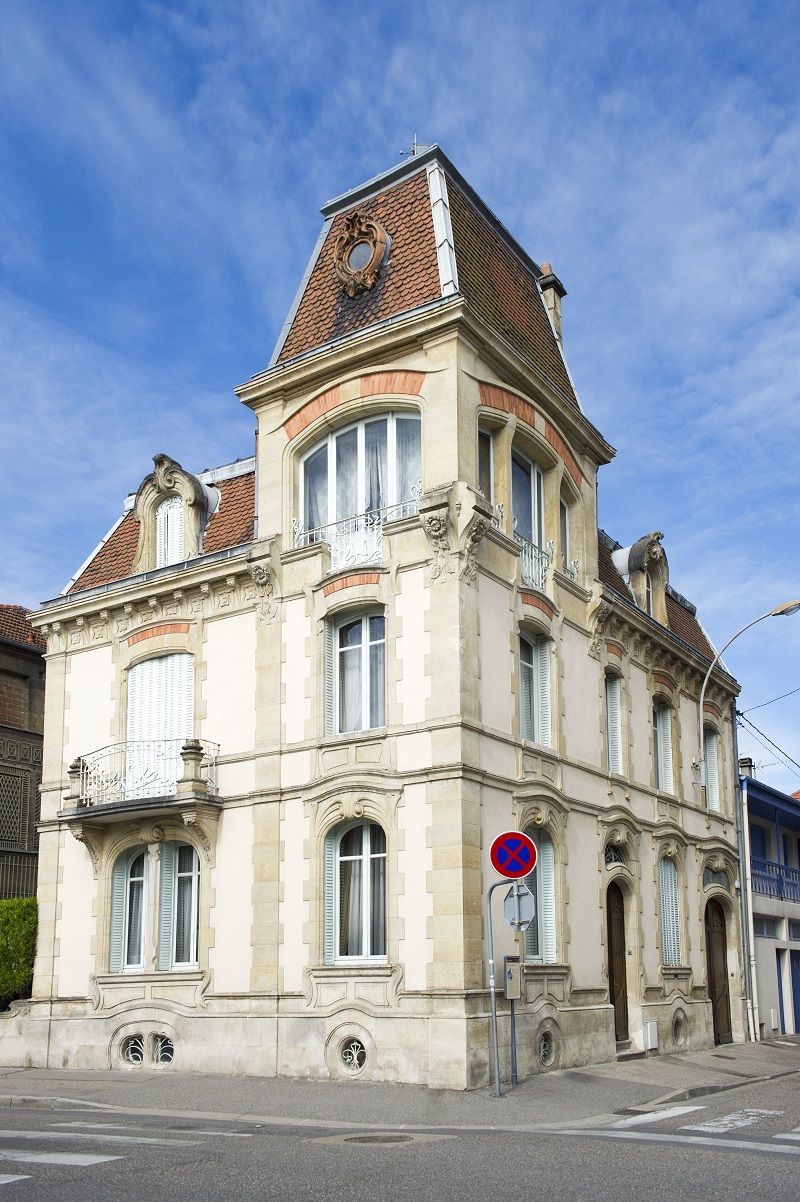
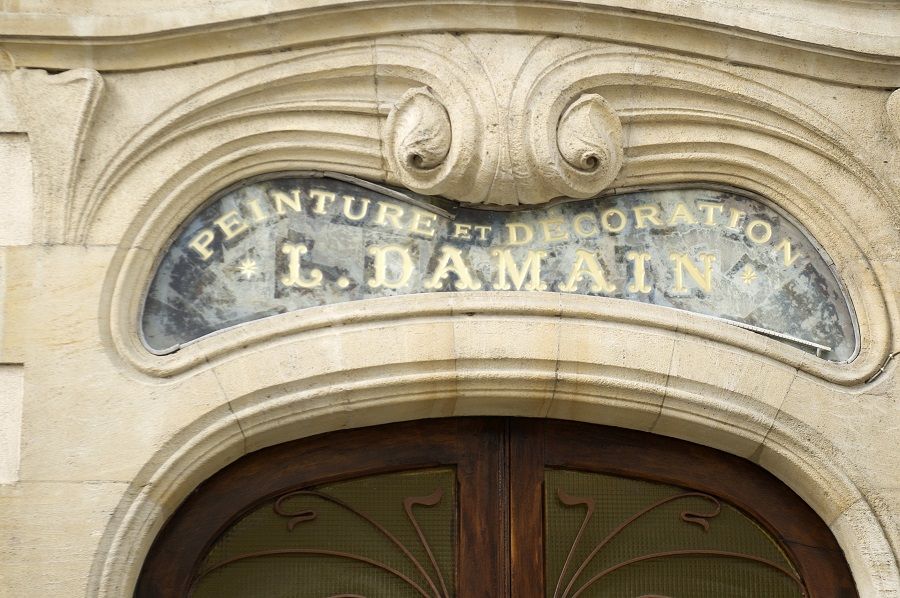
The only house in the city to showcase the Art Nouveau aesthetic, where architecture and decoration form a coherent and harmonious whole, this house was built by the Bar-le-Duc architect Jules Renard to highlight the work of the painter and decorator Léon Damain (1872-1947). An enameled plaque above the side carriage entrance commemorates this Bar-le-Duc artist from a family of painters. Léon Damain was first and foremost a decorator. Between the 19th and 20th centuries, his style evolved from Neo-Gothic to Art Deco, passing through the flowing, floral lines of Art Nouveau. From his training at the École Nationale des Arts Décoratifs in Paris, he retained a concern for a highly decorative style where architecture and ornamentation combine to form a complete work of art. In Bar-le-Duc, the prefecture, the churches of Notre-Dame and Saint-Antoine, and the Château de Marbeaumont, where he also collaborated with the architect Renard, still preserve some of his architectural ensembles. The house he commissioned to house a shop and exhibition space was therefore intended to showcase this symbiosis between the arts. Not without a touch of ostentation, it is designed around a corner pavilion that incorporates materials from classical architecture: Savonnières stone and flat, scale-like tiles. The overlapping windows around a central band and the use of dressed stone quoins are also references to classical art. Nevertheless, this building distinguishes itself through the soft, rounded forms used in both the stonework and the finishing materials. The large windows on the second floor and the bow window overlooking the courtyard demonstrate a desire to reconcile the pursuit of comfort with that of a new aesthetic. The whiplash lines, where curves and double curves intertwine and contrast, are particularly visible on the balcony railing, the window transoms, the courtyard wall, and the dormer windows. The use of plant motifs (sunflowers) also reveals the strong influence of the Nancy School. Only a few scattered elements of the original interior decor remain (stairwell, fireplace, stained-glass windows), as the house was requisitioned and occupied during the Second World War.