Nasium -
theater
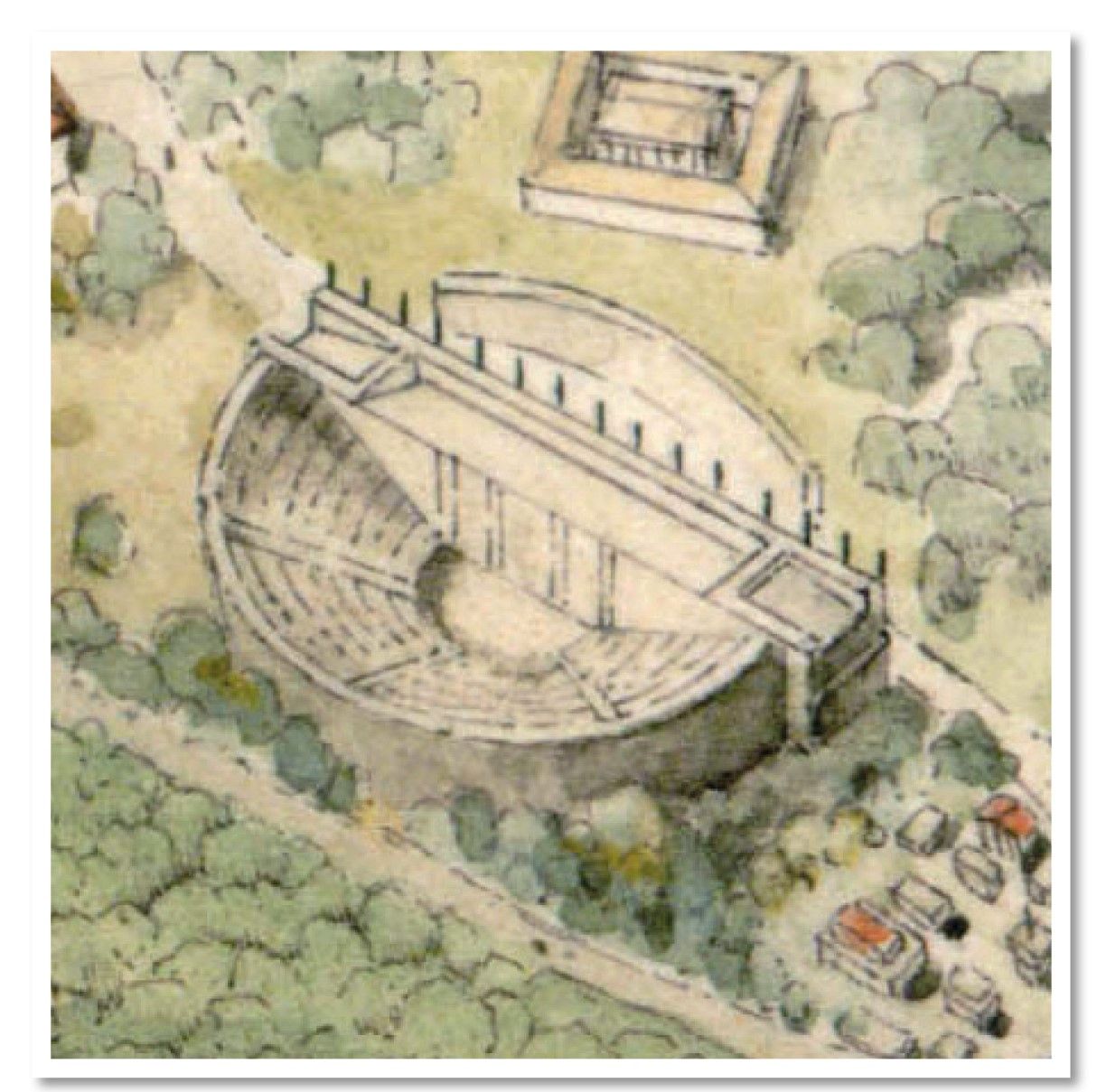
The theater was discovered in the 19th century during excavations led by Claude-François Denis. In 1833, this archaeologist became interested in the site known to locals as "Fossotte" or "Fosse aux Lions" (Lion Pit). Quadrangular stones with iron rings sealed in lead had been discovered there, along with an inscription reading "CIRC." Everything suggested it was a circus where animals were kept tethered. Legend having given way to fieldwork, Claude-François Denis succeeded in demonstrating the existence not of a circus, but of a theater. Soundings carried out on the slopes revealed the remains of tiered seating. The center of the "arena" yielded a sandy layer. Following observations made by Léon Maxe-Werly at the end of the 19th century, the site warrants further study. The Musée Barrois preserves a very beautiful Corinthian capital found on this site, with its decoration of acanthus leaves.