Cross of
paths - top of the early
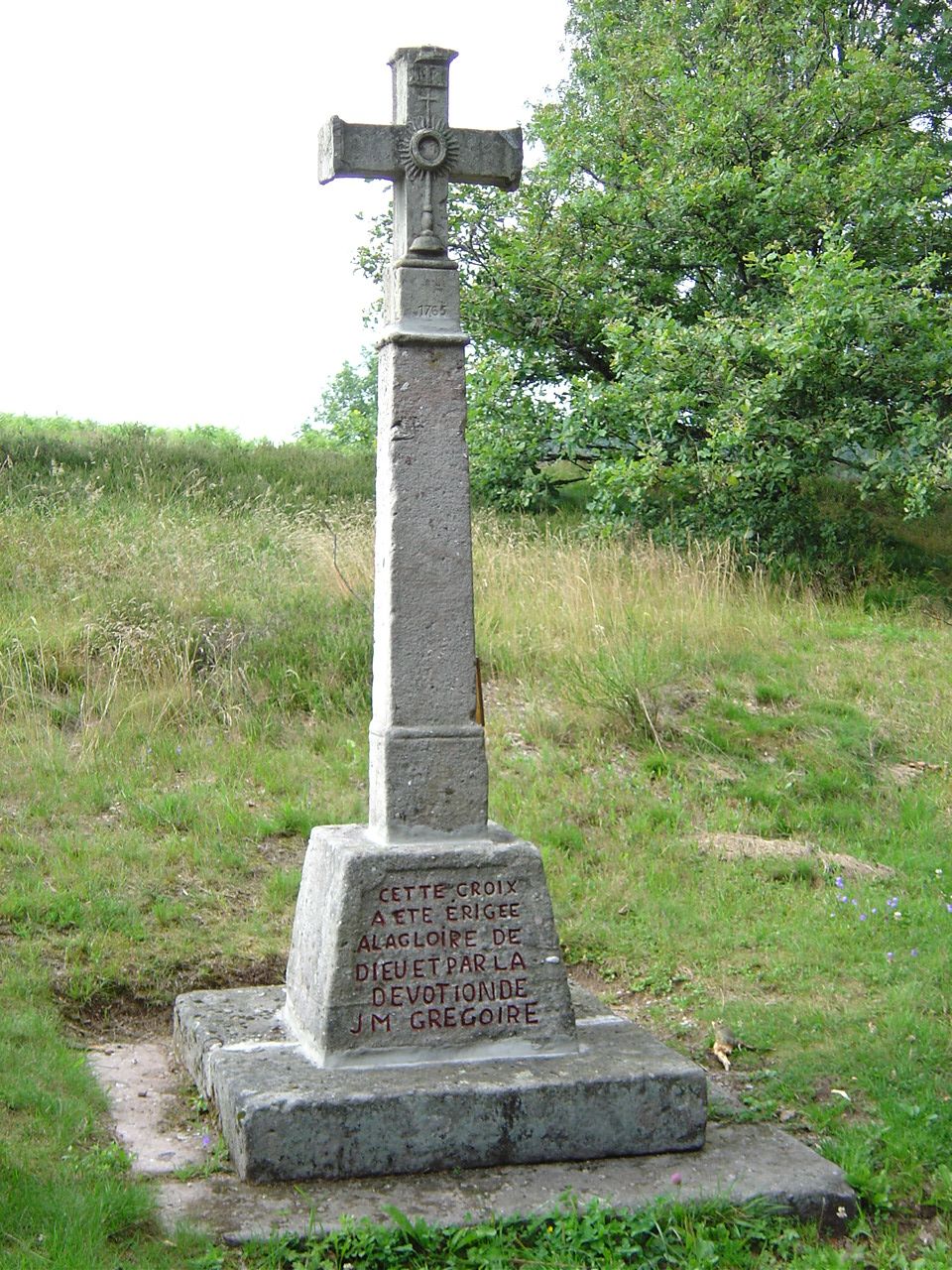
The High Vosges, and particularly the Haut du Tôt area, are dotted with wayside crosses. Also known as calvaries, these stone monuments form an important part of the region's identity and built heritage. The origins of wayside crosses can be divided into three main categories: - Plague crosses, erected in memory of the inhabitants who perished from the plague between 1630 and 1637 and were buried away from inhabited areas. - Devotional crosses erected in honor of God or for the souls in purgatory. - Crosses erected in honor of soldiers killed in action during the liberation of 1944. 398 years of wayside crosses! The tax collector's cross, the oldest in the region, dates from 1602. Located on the Chemin des Tilleuls (Linden Tree Path) in Vagney, it was built on the site where a tax collector was allegedly murdered. The most recent cross was erected at Haut du Tôt during Holy Week in the year 2000. A bottle containing the names of all the inhabitants was sealed in its foundations. An original way to mark the arrival of the new millennium! The Wayside Cross Trail: This trail, composed of two loops, starts at the Col de la Croix des Hêtres. The first loop (2,5 km) allows you to see the first four crosses, which are located in Haut des Charmes. The second (3,5 km) runs through Moyenmont and Haut du Tôt, leading to crosses 5 through 11. Activities: In July and August, it is possible to walk this trail with Daniel Thiriet, a volunteer with the ASF (Association Sportive et Familiale), who will present the origin and history of each of the wayside crosses in Haut du Tôt, as well as rural life on the farms over the past centuries. This guided tour ends at the church, built by the locals in 1832. The first 3,5 km are covered on foot (easy), the rest is by car. Contact: Daniel Thiriet – +33 3 29 61 73 24