Fortified massif
of Souville
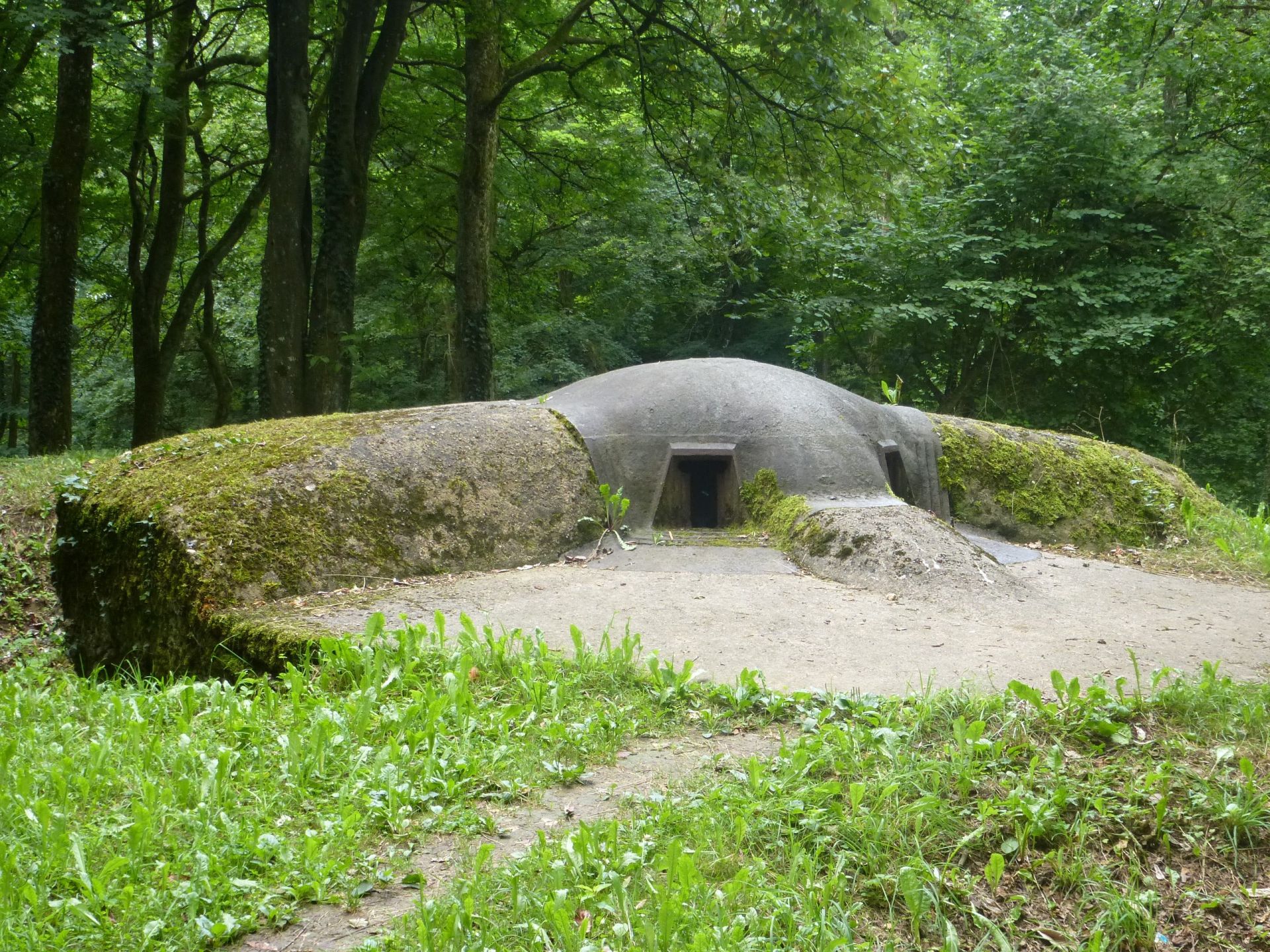
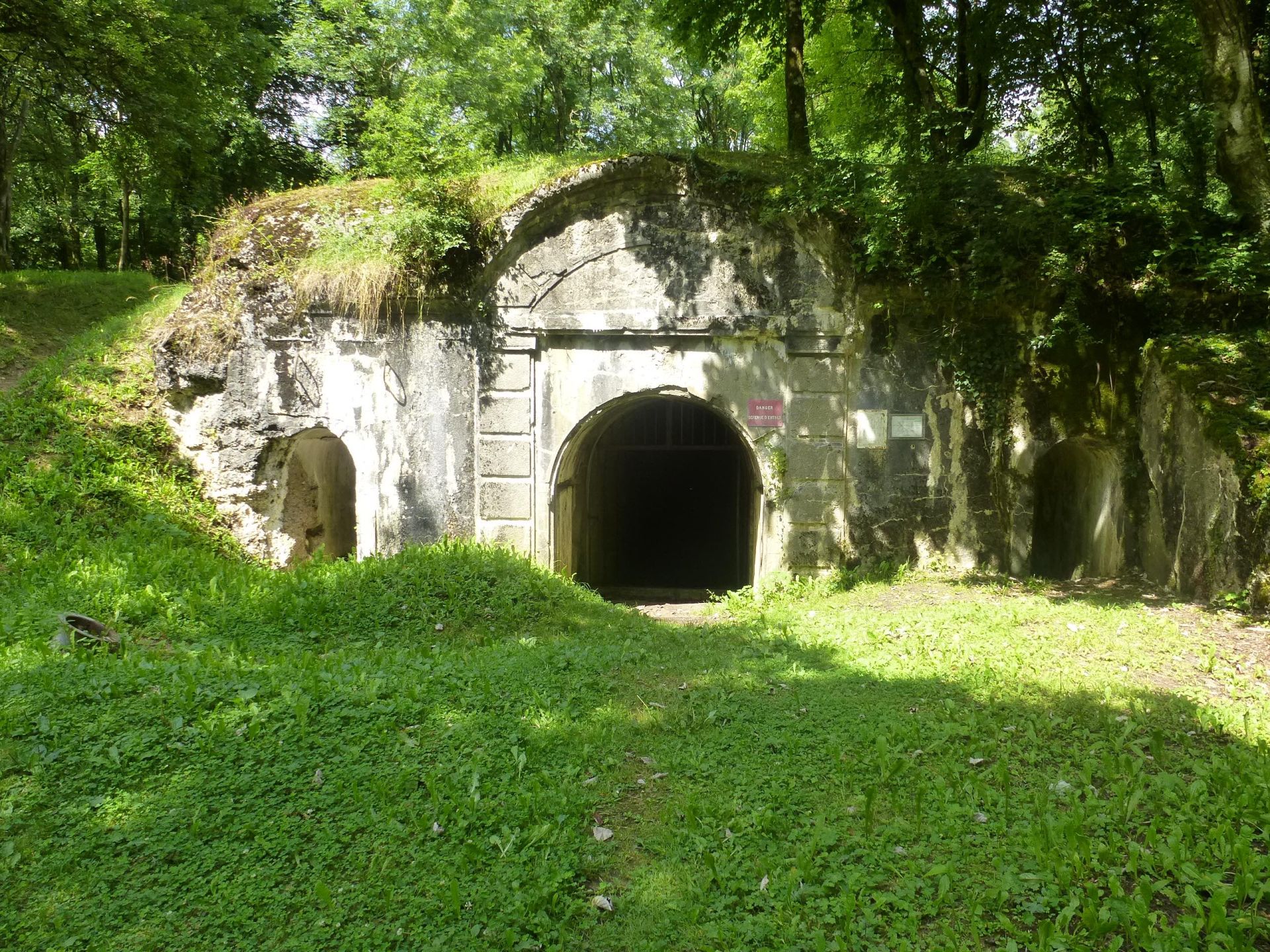
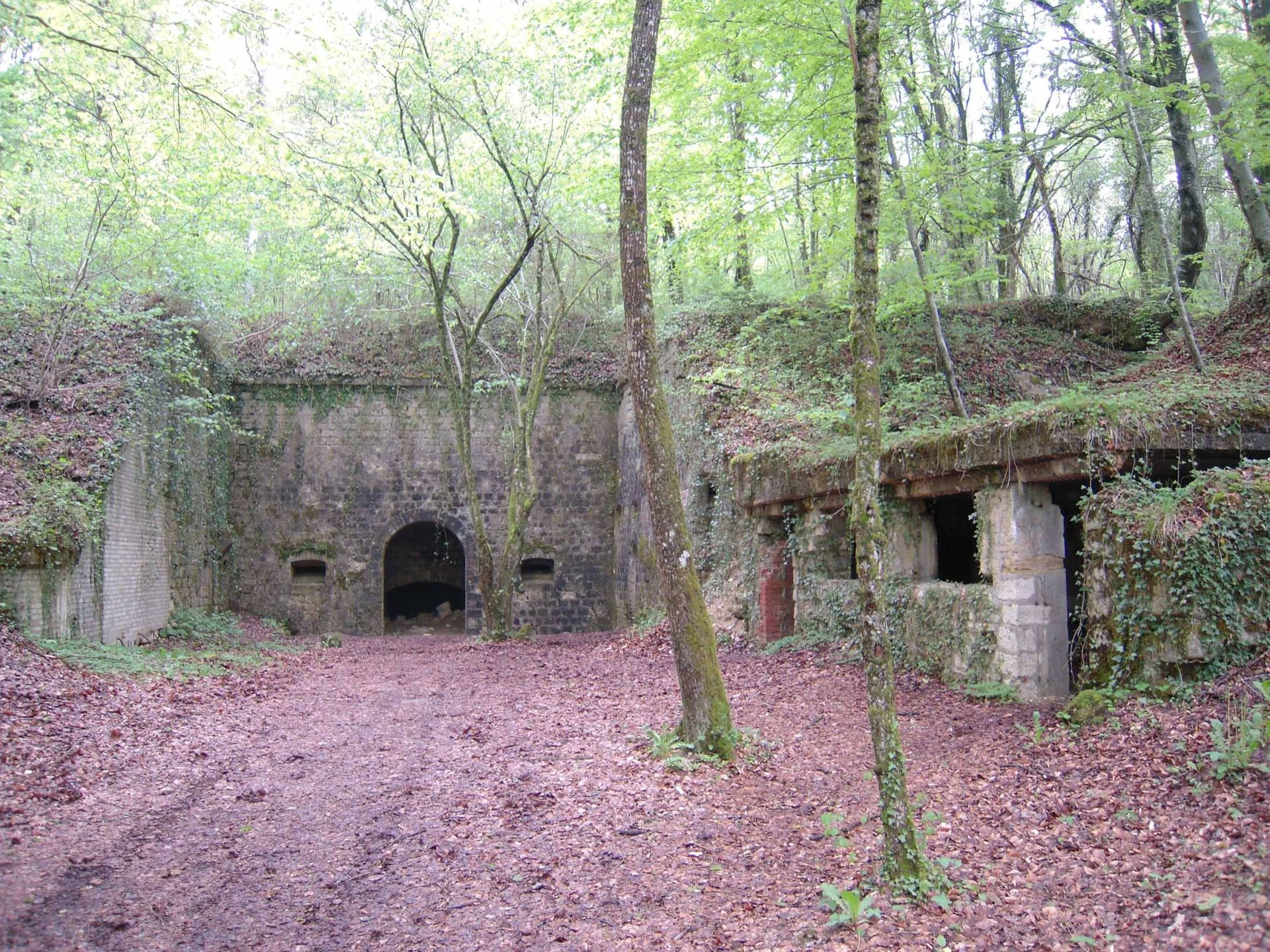
Due to ash dieback (a disease caused by a parasitic, microscopic fungus), some trees and branches in the Verdun Exceptional Forest® are weakened and at risk of falling. As a safety precaution, this area should be avoided. For more information, visit www.tourisme-verdun.com. Souville, a large "first-generation" fort built after the Franco-Prussian War of 1870-71, was later reinforced with concrete only for its powder magazine; the rest of the structure was built of masonry covered with earth, making it extremely vulnerable to large German shells. Although Souville never received Bourges casemates for flanking fire, it was strengthened in 1890 with the installation of Bussières' prototype retractable turret, armed with two long 155 mm guns. Unfortunately, the explosion of one of the shells in April 1916 meant that the turret served only as a lookout and command post for the remainder of the battle. While possession of the fort was crucial for the French, its capture also allowed the Crown Prince's forces a final opportunity to advance unchecked into the city of Verdun. On the morning of July 11, the 3rd Company of the 7th Infantry Regiment, commanded by Second Lieutenant Dupuy, entered the fort and found the surviving garrison virtually incapacitated. The arrival of fresh troops revived the spirits of those who had not been wounded, and the defenses were restored. On the slope outside the fort, other elements of the 7th Infantry Regiment gave way under the fierce German assault, but fortunately the enemy made no significant progress before the 7th's machine guns, firing from the fort's roof, halted them. The following day, Souville remained under harassing fire from German artillery, but the crisis had passed and the defenders of Verdun could breathe a sigh of relief. More than just a fort, Souville was a veritable fortified complex comprising several elements: - Fort - a garrison and a cave shelter for 300 men - 3 Pamart casemates - 2 observation turrets - a disappearing turret for two 155mm guns, known as the "Bussière" turret - a communication network of trenches. Practical information: - pedestrian access to the fort - entry into the fort is prohibited. Accessible via gravel paths, the fortified site of Souville now allows visitors to examine remains such as the Hospital Battery, the Pamart Casemates and the roof of the fort, not forgetting the unique turret of Bussières.