Belonging to the Chapter of Verdun before the Revolution, Vaux has always been a prosperous village throughout its history. The presence of Fort de Vaux nearby has always somewhat disrupted the course of the village's history. Indeed, from its construction between 1881 and 1884, the village was widely used to help house the many workers who took turns working there; just as during the major reinforcement work undertaken on the Fort from 1888 to 1912.
The village of Vaux-Devant-Damloup is located in the heart of the Verdun battlefield. The Fort of Vaux is named after him. This village was completely destroyed in 1916 during the Battle of Verdun.
In 1915, the decision by the general staff, aimed at partially disarming all the forts, transferred the defensive effort particularly to the villages. Therefore, Vaux, located to the north of its fort and in contact with the Woëvre plain, naturally becomes an important point in the defense system of the entrenched camp of Verdun.
During the major German offensive, launched at the end of February 1916, it was one of the major objectives of the Germans after the capture of Douaumont, which fell on March 2, and before that of Fort de Vaux. After fierce fighting within its walls, the village fell into German hands on March 31, 1916. The French bombings of April followed the German bombings of March, only accentuating the complete annihilation of the village.
The year is 1924… The name of Vaux-Devant-Damloup was about to be erased from the map of France and the territory of the commune, definitively classified as a “red zone”, had already been bought back by the state. Love of the native soil, the cult of memory, the call of the graves were soon to bring together a bundle of goodwill and allow first of all the creation of a moral city, a city of souls, preface to a material reconstitution, however modest it might be - Already an artery had brought a semblance of life to the deserted valley: an economical railway line was restored; a small station was built. To house the station employees, modest houses had been built along the railway line. A school was operating in a shack while waiting for something better. The municipality, under the active leadership of its new mayor, put together various projects and worked without delay to bring them to fruition.
A sum of 150,000 francs was allocated, in successive installments, to the creation of a new road network. The construction of a town hall and school in 1928 marked the revival of the locality. A water supply was installed, and an electrical conduit was laid.
When the surroundings of the town became more hospitable, plans were made to build a chapel, a temple of remembrance in which the former inhabitants and the families of the eighteen children of the village who died on the field of honor would come to pray.
In order to assert the legal personality of the new agglomeration, the municipality bought back 30 hectares of land while the mayor, his deputy and some other residents did the same for their personal benefit: 200 hectares were thus removed from the red zone.
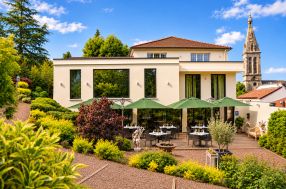
Today, Vaux-Devant-Damloup is the only village rebuilt on the battlefield territory, about 500 meters from the destroyed village. There are about thirty dwellings and 72 inhabitants.