Destroyed village
of Cumières-le-Mort-homme
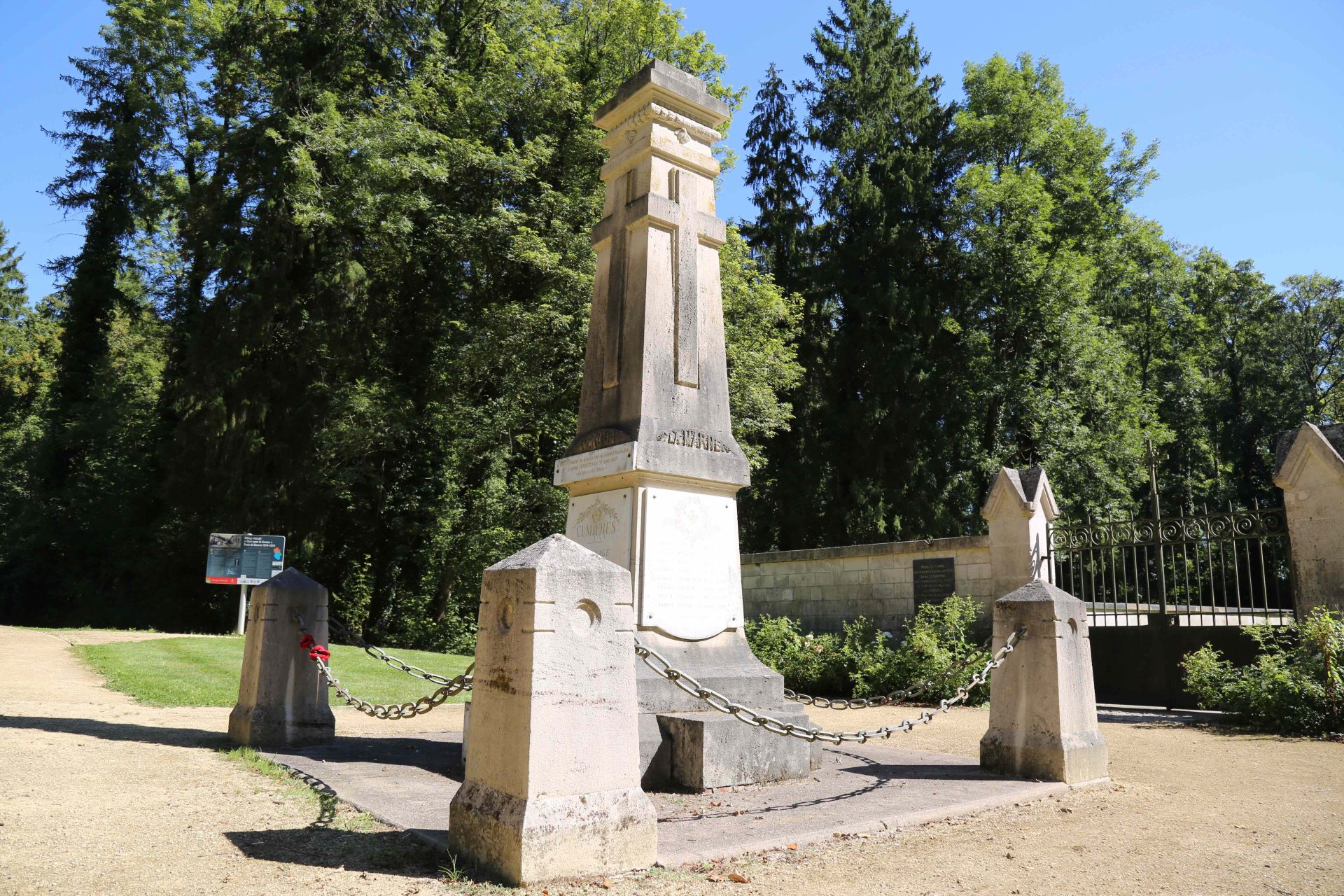
This destroyed village, the only one on the left bank of the Meuse among the nine villages destroyed during the First World War, had 205 inhabitants in 1913. Its origins are very ancient, as evidenced by the discovery of a Neolithic burial pit there in 1873. In the Middle Ages, one of the lords of Cumières began extorting money from anyone who passed through his lands, particularly the inhabitants of Verdun. They formed a league against him and destroyed his castle in 1439. Nearly five centuries later, the entire village suffered the same fate, but for different reasons. Indeed, after the German army launched its massive offensive in February 1916 to capture Verdun from the heights on the right bank of the Meuse, the German high command decided to outflank the French resistance from the west. The Germans first sought to seize the heights of Mort-Homme, in a particularly bloody battle that lasted ten days, from March 6 to 16, 1916. They succeeded and extended their attack on March 20 towards Hill 304, located further west. The fighting was fierce under a veritable deluge of fire and in appalling weather conditions. Further east, Cumières, held by the 5th Battalion of the 254th Infantry Regiment, was attacked from May 16 to 23, 1916. The village fell to the Germans on May 24, 1916, despite the heroic defense of the French infantrymen. It wasn't until August 20, 1917, that the ruins of the village of Cumières were recaptured by the Foreign Legion's marching regiment. At the end of the war, in 1918, Cumières was placed in the "red zone" along with the entire Mort-Homme hill, and subsequently received the unique status of "destroyed village," along with eight other equally devastated villages in the Meuse region. Between the two world wars, veterans, very active in honoring the memory of the countless soldiers killed, wounded, or missing in the mud of this important battlefield, made it possible to erect the impressive skeleton monument on Mort-Homme in 1922 and finally to add the name of this bloody hill to that of the destroyed village of Cumières, "Died for France," just like the 10,000 soldiers who fell in this sector of Mort-Homme. Finally, as in the eight other destroyed villages on the right bank of the Meuse, Cumières-le-Mort-Homme built the Saint-Rémi chapel on August 6, 1933, using stones from the old church, to commemorate the village's happy existence at the foot of its hill. Sights to see: - The Saint-Rémi chapel, built with stones from the old church (paintings by Lucien Lantier); - The war memorial; - The skeleton monument (a striking work by sculptor Jacques Froment-Meurice, erected by the association of veterans of the 63rd Infantry Division) at the top of Mort-Homme hill; - The remains of the millrace.