Maginot Monument
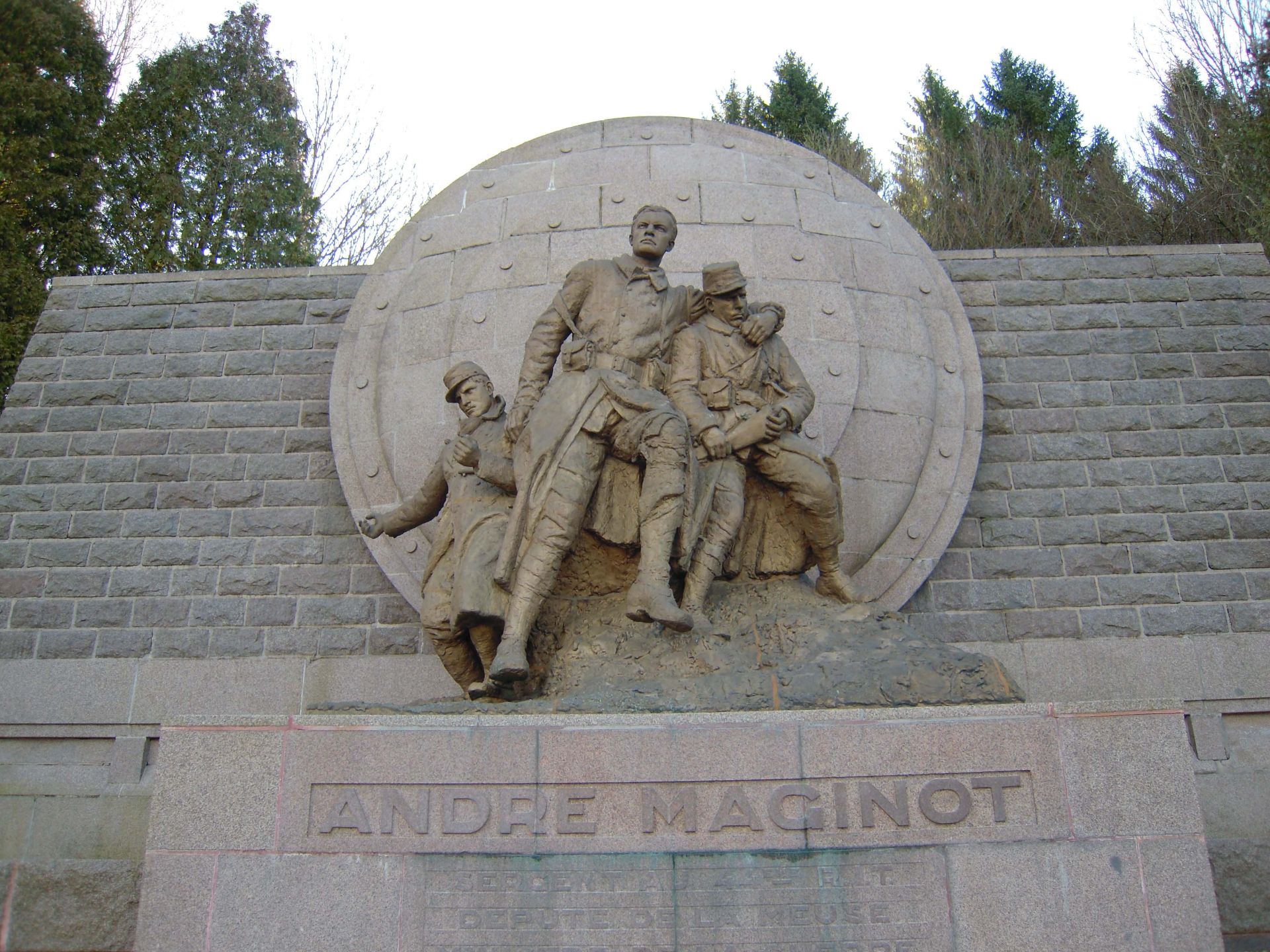
Contrary to the principle established at the time of mobilization, many territorial units would find themselves alongside their active-duty comrades in the same context. One regiment—the 44th Territorial Infantry Regiment (RIT)—would welcome into its ranks the deputy for the Meuse department, a certain André Maginot. A deputy for the Meuse and a volunteer in 1914, he quickly earned the rank of sergeant and led patrols in hostile territory. This daring nearly cost him his life on November 8, 1914, near the Bois des Hayes. Seriously wounded, he was narrowly saved by his comrades and cared for for many months. After the Armistice, he resumed his parliamentary activities. He became Minister of Colonies in 1917, Minister of Pensions in 1920, and Minister of War in 1922. On November 10, 1920, he presided over the famous ceremony of the Unknown Soldier within the walls of the citadel at Verdun. Afflicted with typhoid fever, he died in 1932, having just completed his work on fortifications in eastern France. Three years after his death, President Albert Lebrun inaugurated the monument to Gaston Broquet, located against the Souville massif. Shaped like a shield, the scene depicts the heroic rescue of Sergeant André Maginot by his comrades on November 8, 1914.