Belvedere path
of scythe with a bratte
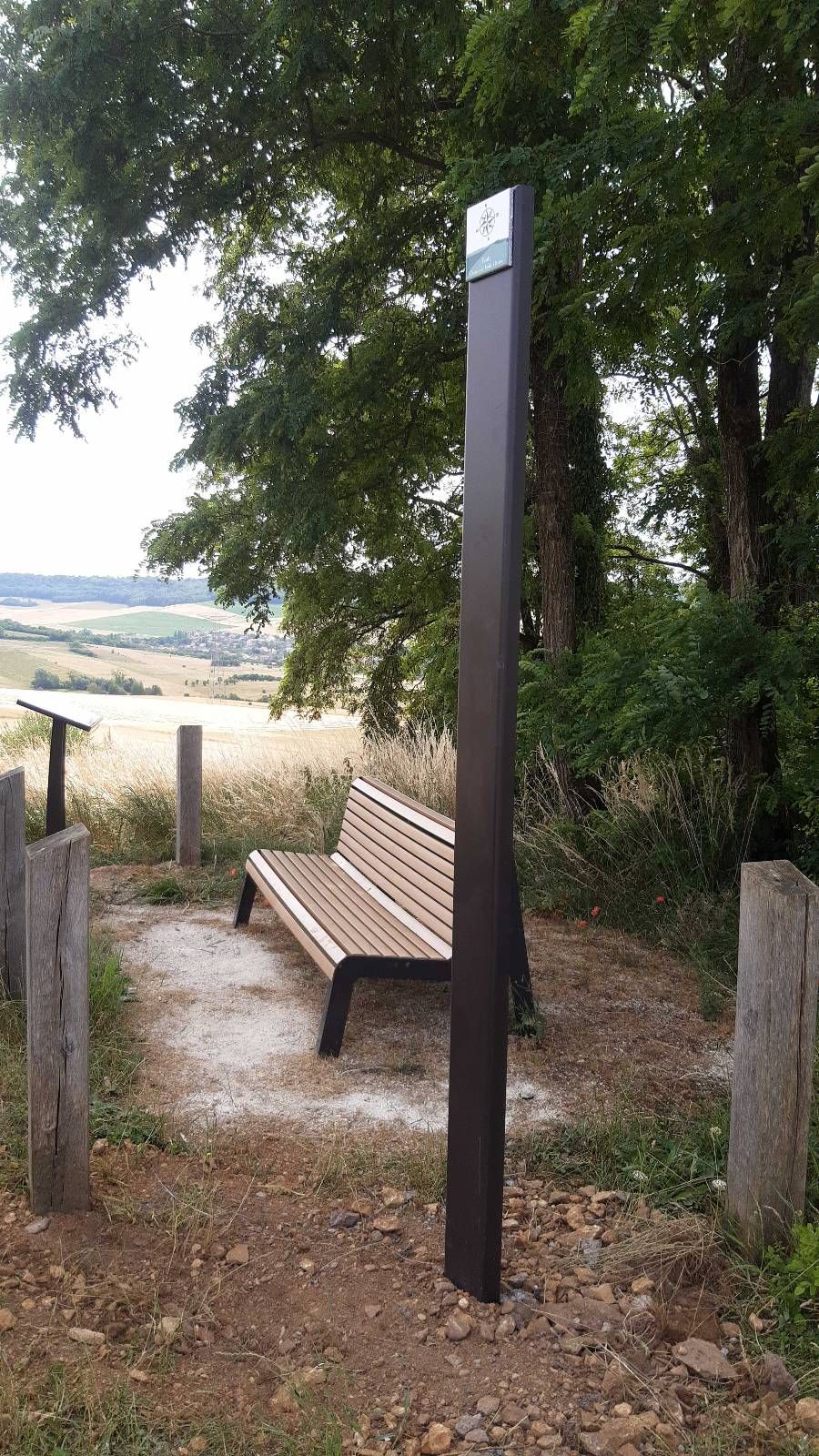
Located opposite the Tayes viewpoint on the heights above Faulx, a village of 1344 inhabitants, the locality known as "Les Saulières" proved to be a strategic location during the Second World War. The German army requisitioned workers from the Pompey factory to cut wood and build shelters to store shells. From there, an artillery post targeted enemy troops deployed in the Moselle department. The view of the village from the heights is exceptional. On a clear day, one can see the Moselle Valley, as well as the Brabois hill and Mont Saint-Michel above Toul. 54% of this 1720-hectare area is natural, and 42% is agricultural land, including numerous orchards (apple and mirabelle plum trees) that contribute to the village's renown. Beech trees gave their name to the village: Fagorum Vallis de Fagus, meaning the valley of the beeches. The village encompasses both Basse and Haute Faulx, nestled in the Mauchère valley, named after the stream that meanders through the village and leaves it in a magnificent waterfall on the western side. On this slope, at the edge of the Rumont forest, lie two springs that supply the village with drinking water: "La Fontaine Bénite" (The Blessed Fountain) and "La Couleuvre" (The Snake).