Destroyed village
of Bezonvaux
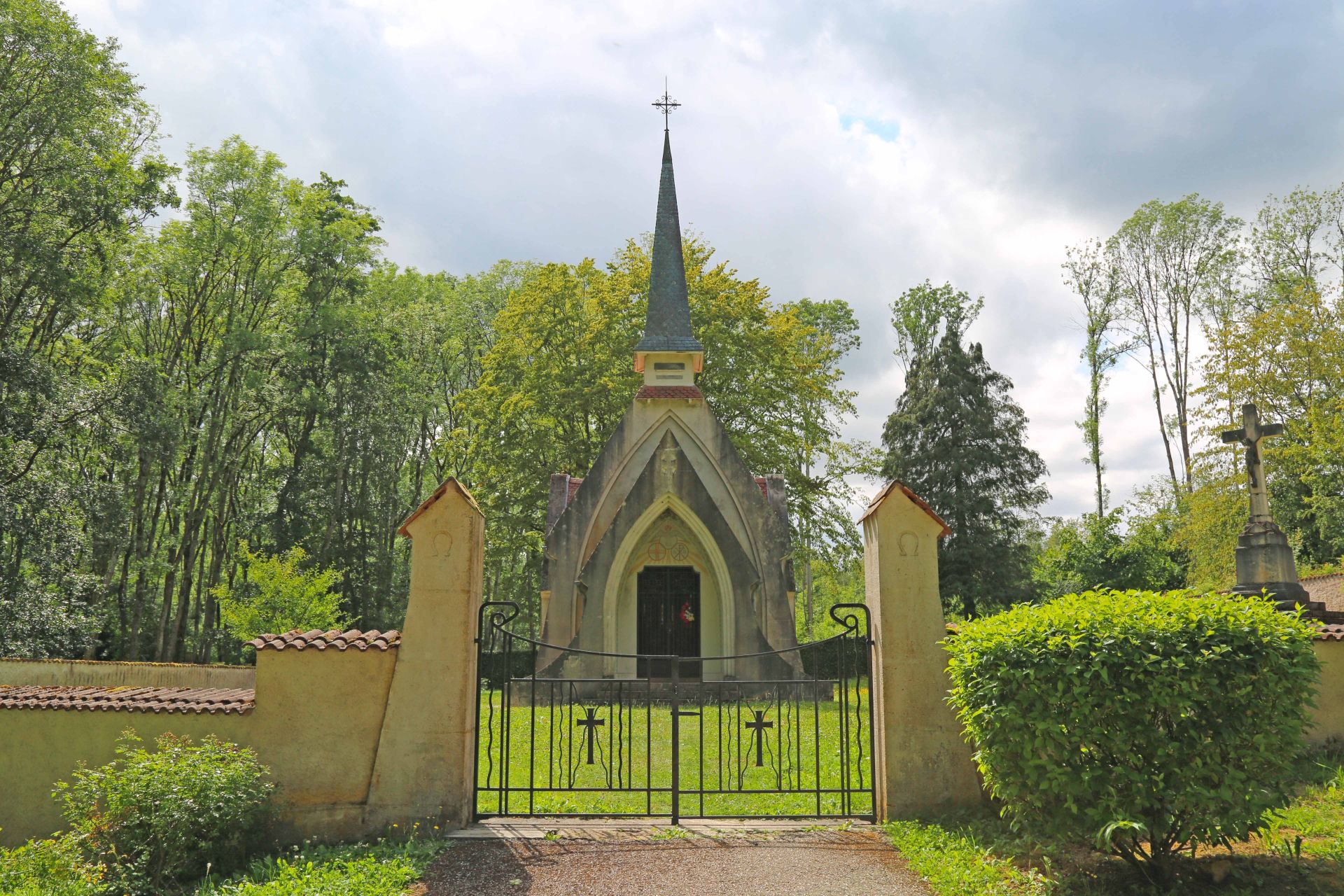
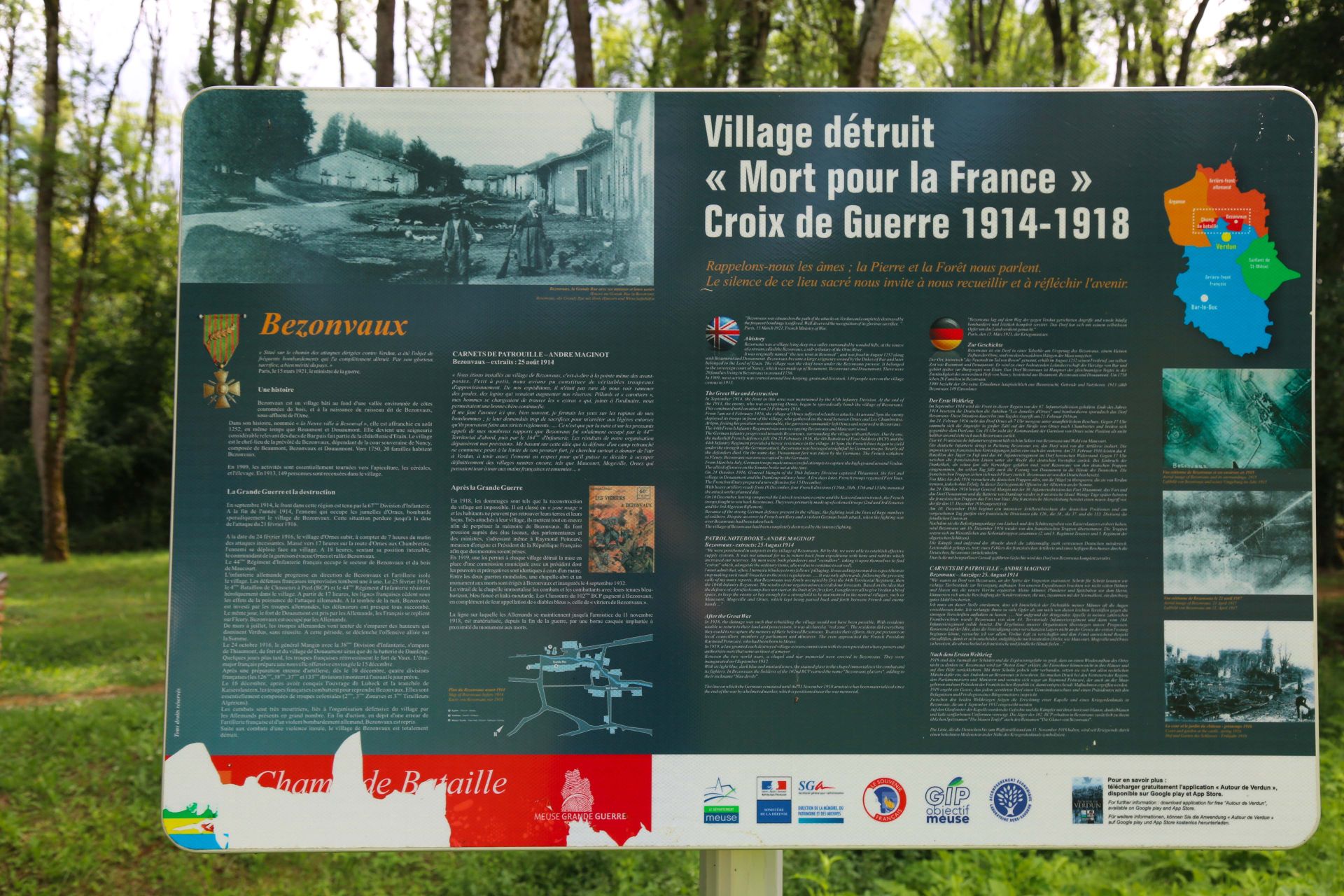
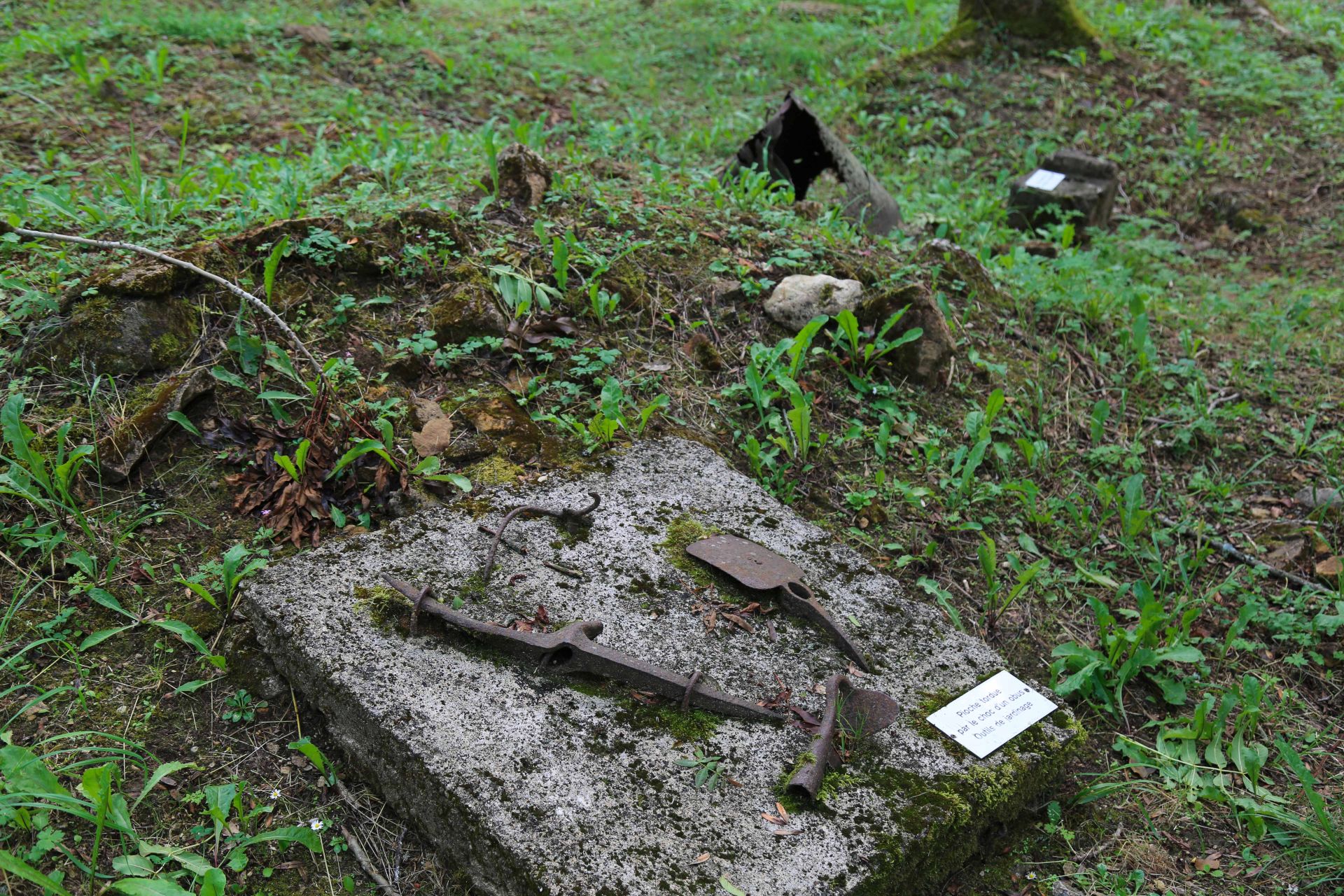
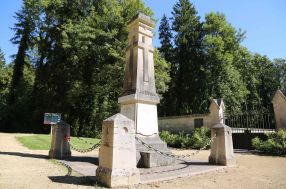
Due to ash dieback (a disease caused by a parasitic and microscopic fungus), some trees and branches in the Forêt d'Exception® of Verdun are weakened and at risk of falling. For security reasons, this site should be avoided. For more information on www.tourisme-verdun.com Essentially rural, populated by 149 inhabitants in 1913, mainly farmers, beekeepers or small traders, the village of Bezonvaux still had a castle when the war began in 1914. The German advance to the Meuse in 1914 prompted the population to initially desert it. But as the front stabilized further north, it returned there, despite some sporadic German bombardments, at the end of 1914 and in 1915, coming from the Ornes twin towers. She mingled with a large number of military personnel in transit or settling there, as did Sergeant André Maginot, the famous Minister of War appointed in 1922 and then in 1929, who installed his patrol boats there… Then she had to leave for good shortly before the Battle of Verdun. After the massive German attack, launched on February 21, 1916, the French troops fighting in Ornes retreated to Bezonvaux on February 24… The next day, February 25, the 4th Battalion of Chasseurs à Pied and the 44th Infantry Regiment, charged with its defense, gave way desperately under the violent assaults of the German artillery and then infantry, which then took possession of the gutted village, while the Poilus retreated to Fleury… The village remained in German hands until mid-December 1916. Indeed, on December 15, 1916, a French attack by the 2nd and 3rd Zouaves and 3rd Algerian Tirailleurs, coming from the east of Fort Douaumont, launched an assault on Bezonvaux where the front stabilized for the last two years of the war. The village continued to fall under more or less intensive bombing during this final period, which saw the disappearance of both its imposing castle and its modest houses. In 1918, classified as a "red zone", it no longer allowed the reconstruction that its inhabitants could have dreamed of after the war. Its specific status as a destroyed village decreed in 1919 allowed it to start anew, which was exclusively dedicated to the work of remembrance, notably with the construction of its Saint Gilles chapel-shelter and its war memorial… During the Second World War, it was the scene, once again, of violent fighting on June 14, 1940 in its sector where the 132nd RIF managed to stop the advance of the German invader for a few hours, inflicting heavy losses on them. Today, the work of remembrance carried out there has created a very interesting historical trail showcasing the village's past life. To see: - The Saint Gilles chapel-shelter (commemorative stained glass windows by Gruber, immortalizing the liberation of Bezonvaux by the chasseurs of the 102nd BCP, later nicknamed "the glaziers of Bezonvaux" on December 16, 1916 and fresco by the painter Lucien Lantier); - The monument to the destroyed village (obelisk on which is engraved the citation awarded to the martyred village. Bas-relief showing the main street of the village before the war); - The helmeted marker on the side of the road crossing the village and marking the front line until the armistice of November 11, 1918; - The monument to the Maginot patrolmen; - Historical trail showing the locations of the old houses and the activities of the past.