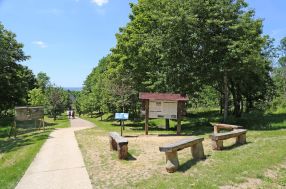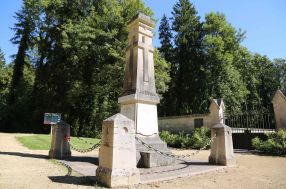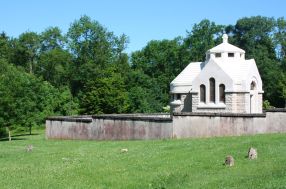
Destroyed village
of Haumont near Samogneux
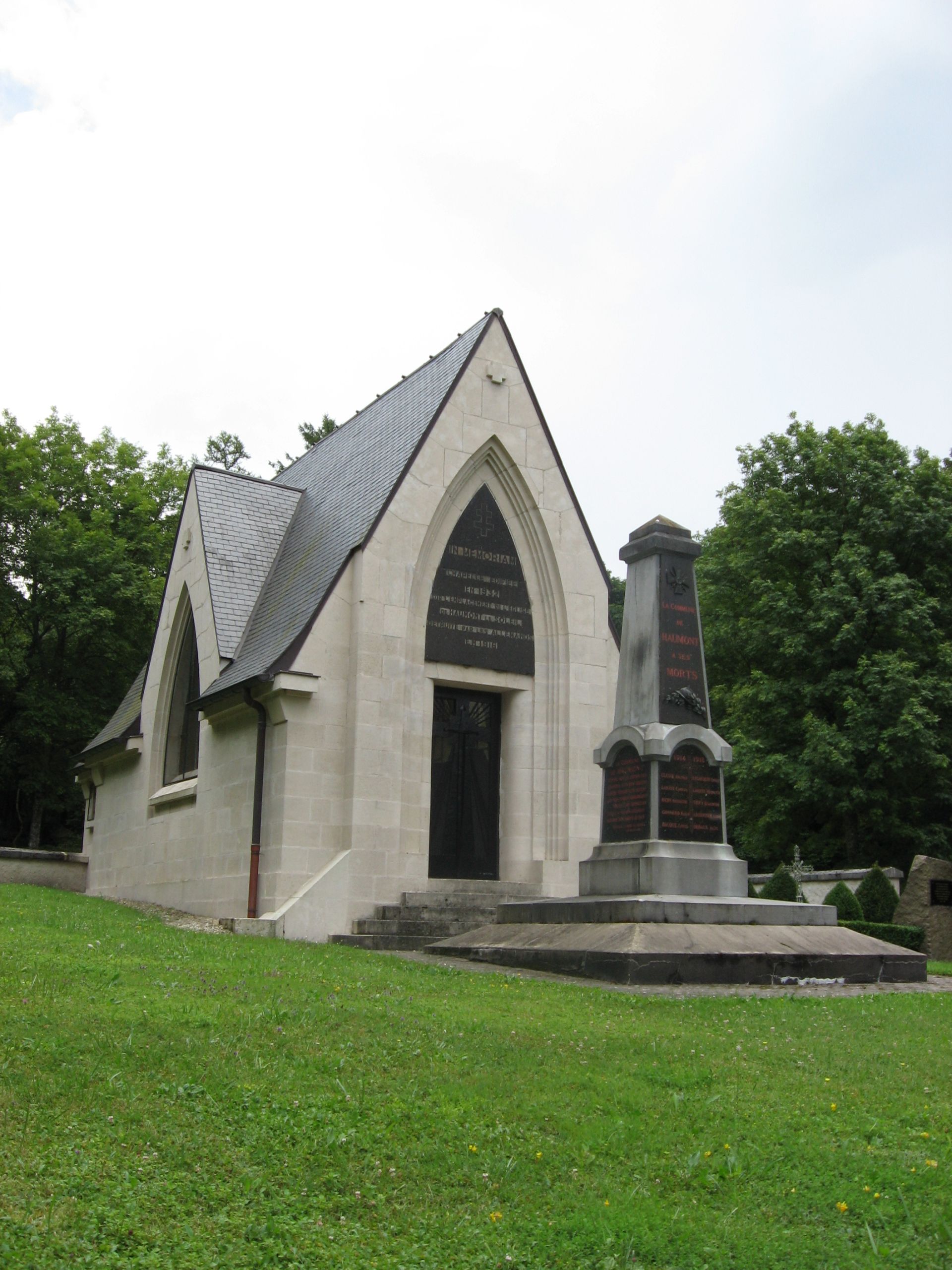
Due to ash dieback (a disease caused by a parasitic and microscopic fungus), some trees and branches in the Forêt d'Exception® of Verdun are weakened and at risk of falling. For security reasons, this site should be avoided. For more information on www.tourisme-verdun.com Before even being a village, Haumont near Samogneux was first a place of Gallic celebration of the Sun God through an altar erected in the 1st century AD on its heights. Later, the Roman army established a fortified camp there. Towards the end of the Thirty Years' War between Catholics and Protestants, the village was left completely ruined by the incessant passage of troops extorting and even torturing the inhabitants who were unable to satisfy them. From 300 inhabitants in 1850, its population fell to 139 in 1914. It was evacuated shortly after the start of the war, due to its location far to the north, too close to the front which had stabilized a few kilometers away, thanks to the success of the Battle of the Marne. However, it suffered its first bombing on February 7, 1915, which damaged part of its church. But this was nothing compared to the one he would suffer a year later, on February 20, 1916, at the very beginning of the great German offensive on Verdun. On February 22, 1916, the valiant defense of the village by the 362nd Infantry Regiment forced the German assault troops to retreat… This brief respite for the soldiers ended with a barrage of iron and fire launched by the powerful German artillery. During this violent bombardment, the village literally collapsed, burying 80 valiant soldiers under its stones and rubble. The German advance on the French lines allowed the village to be away from the intensive fighting taking place further south until October 1918, when the offensive push of the French army returned to its sector. Its ruins were indeed recaptured on October 8, 1918, by the 67th Infantry Regiment and the 66th and 68th Battalions of Senegalese Riflemen, a little over a month before the end of hostilities. Between the two wars, Haumont near Samogneux was declared, in 1919, a "destroyed village", whose unique status was shared by eight other villages in Meuse. On March 15, 1921, he was cited in the order of the army to mark the Nation's recognition for the supreme sacrifice of the commune. On August 28, 1928, its war memorial was inaugurated and in 1932, its Saint Nicholas chapel-shelter was built and then furnished and decorated in 1933, thus proving the will of its former inhabitants, the "Sachots", to make it a respected place of memory. In 1940, the start of the Second World War saw new battles taking place on its territory, during the inevitable advance of the German army pushing back the few remaining valiant French troops desperately trying to slow it down. The effect of the subsequent occupation of the country saw the effective abandonment of the maintenance of this memorial site from 1940 until 1968. Nature reclaimed its rights, and the chapel even disappeared under the vegetation… But in 1971, under the impetus of its mayor, Charles Renversez, a major cleaning and restoration project was undertaken. And now, Haumont near Samogneux and the "Sachots" continue each year this essential work of remembrance, so necessary for future generations. Sights to see: - The Saint-Nicolas chapel (triptych painting by Lucien Lantier, representing the village in 1914, 1915 and 1916); - The war memorial; - Remains of the village.